

What are lost continents, and why are we discovering so many?
- Written by: Maria Seton, ARC Future Fellow, University of Sydney
For most people, continents are Earth’s seven main large landmasses.
But geoscientists have a different take on this. They look at the type of rock a feature is made of, rather than how much of its surface is above sea level.
In the past few years, we’ve seen an increase in the discovery of lost continents. Most of these have been plateaus or mountains made of continental crust hidden from our view, below sea level.
One example is Zealandia, the world’s eighth continent that extends underwater from New Zealand.
Several smaller lost continents, called microcontinents, have also recently been discovered submerged in the eastern and western Indian Ocean.
But why, with so much geographical knowledge at our fingertips, are we still discovering lost continents in the 21st century?
We may have found another
In August, we undertook a 28-day voyage on the research vessel RV Investigator to explore a possible lost continent in a remote part of the Coral Sea. The area is home to a large underwater plateau off Queensland, called the Louisiade Plateau, which represents a major gap in our knowledge of Australia’s geology.
Read more: Explainer: the RV Investigator’s role in marine science
On one hand, it could be a lost continent that broke away from Queensland about 60 million years ago. Or it could have formed as a result of a massive volcanic eruption taking place around the same time. We’re not sure, because nobody had recovered rocks from there before - until now.
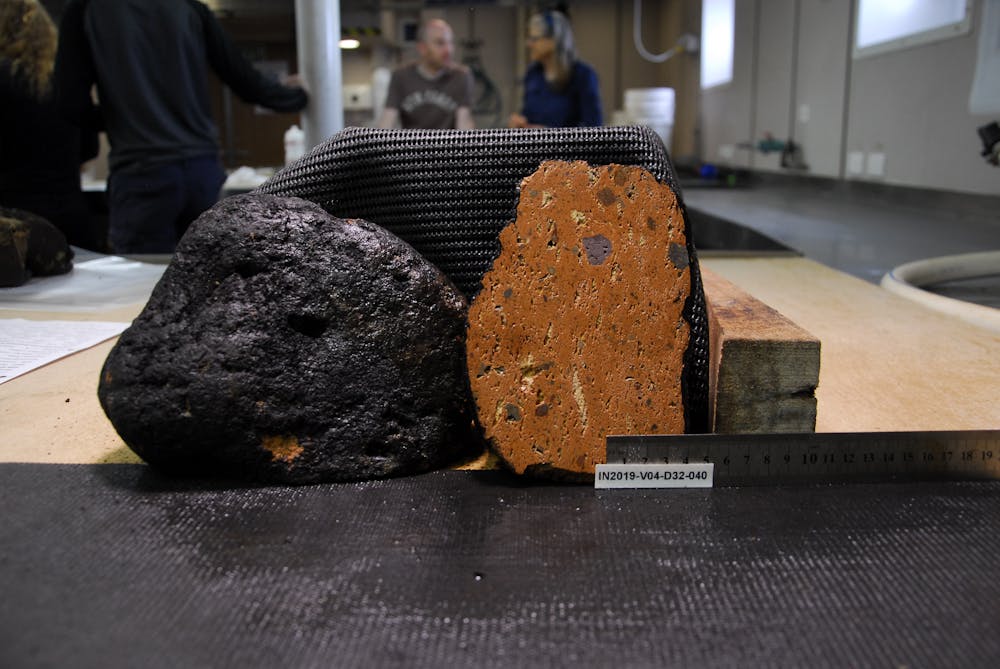 An extremely violent eruption formed this volcanic rock we recovered.
Author supplied
An extremely violent eruption formed this volcanic rock we recovered.
Author supplied
We spent about two weeks collecting rocks from this feature, and recovered a wide variety of rock types from parts of the seafloor as deep as 4,500m.
Most were formed through volcanic eruptions, but some show hints that continental rocks are hiding beneath. Lab work over the next couple of years will give us more certain answers.
Down to the details
There are many mountains and plateaus below sea level scattered across the oceans, and these have been mapped from space. They are the lighter blue areas you can see on Google Maps.
However, not all submerged features qualify as lost continents. Most are made of materials quite distinct from what we traditionally think of as continental rock, and are instead formed by massive outpourings of magma.
A good example is Iceland which, despite being roughly the size of New Zealand’s North Island, is not considered continental in geological terms. It’s made up mainly of volcanic rocks deposited over the past 18 million years, meaning it’s relatively young in geological terms.
The only foolproof way to tell the difference between massive submarine volcanoes and lost continents is to collect rock samples from the deep ocean.
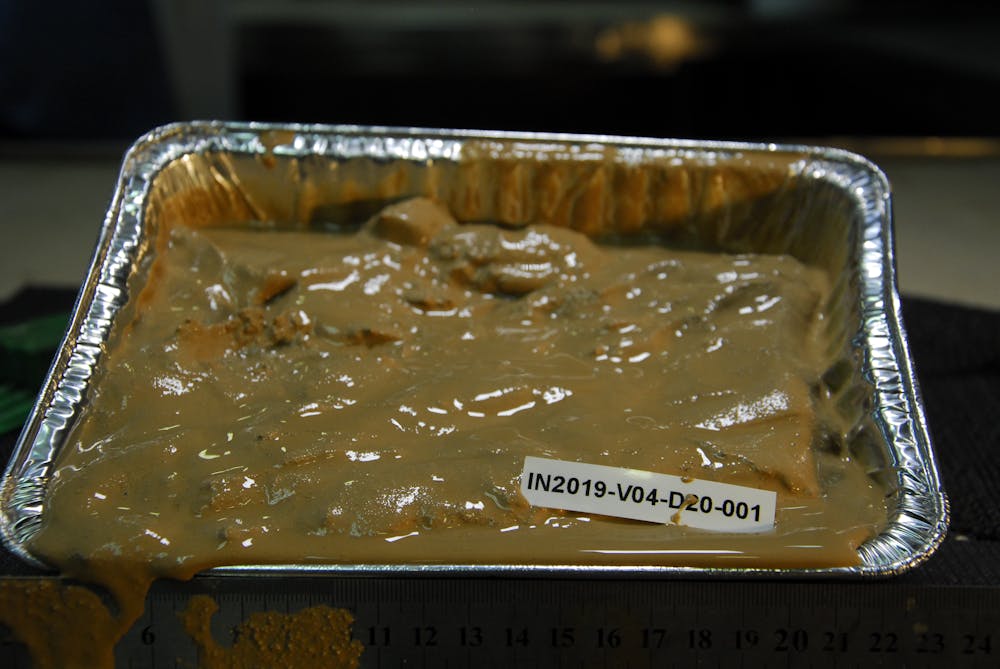 Plenty of soft, gloopy sediment covers the bottom of the Coral Sea.
Author provided
Plenty of soft, gloopy sediment covers the bottom of the Coral Sea.
Author provided
Finding the right samples is challenging, to say the least. Much of the seafloor is covered in soft, gloopy sediment that obscures the solid rock beneath.
We use a sophisticated mapping system to search for steep slopes on the seafloor, that are more likely to be free of sediment. We then send a metal rock-collecting bucket to grab samples.
The more we explore and sample the depths of the oceans, the more likely we’ll be to discover more lost continents.
The ultimate lost continent
Perhaps the best known example of a lost continent is Zealandia. While the geology of New Zealand and New Caledonia have been known for some time, it’s only recently their common heritage as part of a much larger continent (which is 95% underwater) has been accepted.
Read more: Explorers probe hidden continent of Zealandia
This acceptance has been the culmination of years of painstaking research, and exploration of the geology of deep oceans through sample collection and geophysical surveys.
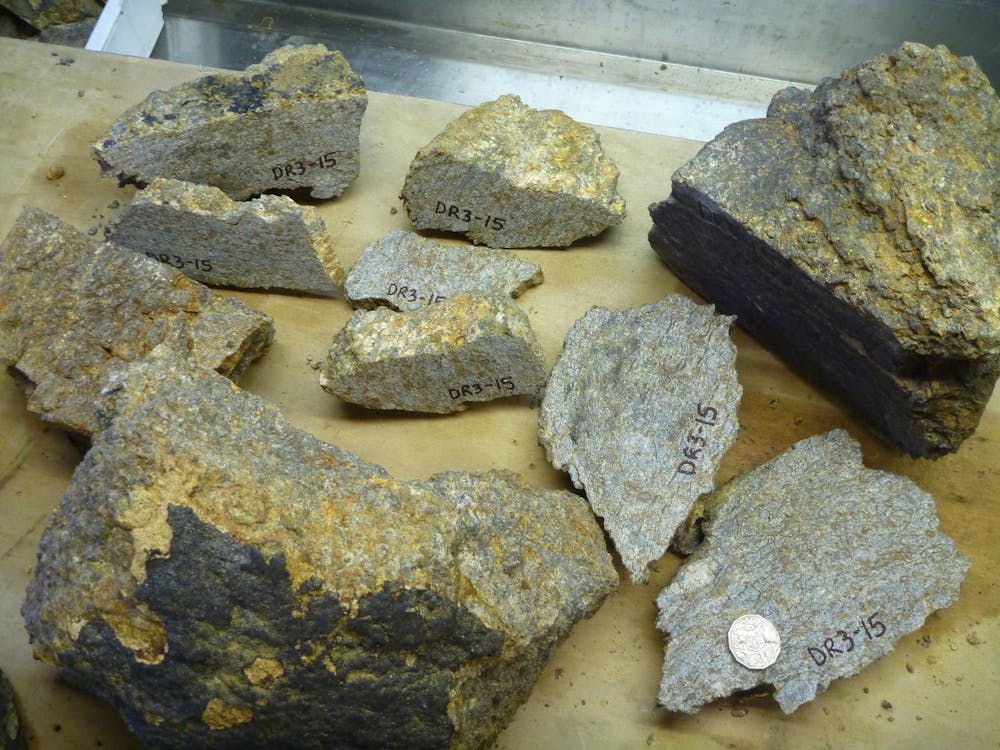 Continental rocks recovered from a microcontinent in the Indian Ocean are similar to rocks found in Western Australia.
Author supplied
Continental rocks recovered from a microcontinent in the Indian Ocean are similar to rocks found in Western Australia.
Author supplied
New discoveries continue to be made.
During a 2011 expedition, we discovered two lost continental fragments more than 1,000km west of Perth.
The granite lying in the middle of the deep ocean there looked similar to what you would find around Cape Leeuwin, in Western Australia.
Other lost continents
However, not all lost continents are found hidden beneath the oceans.
Some existed only in the geological past, millions to billions of years ago, and later collided with other continents as a result of plate tectonic motions.
Their only modern-day remnants are small slivers of rock, usually squished up in mountain chains such as the Himalayas. One example is Greater Adria, an ancient continent now embedded in the mountain ranges across Europe.
Due to the perpetual motion of tectonic plates, it’s the fate of all continents to ultimately reconnect with another, and form a supercontinent.
But the fascinating life and death cycle of continents is the topic of another story.
Read more: How Earth's continents became twisted and contorted over millions of years
Authors: Maria Seton, ARC Future Fellow, University of Sydney
Read more http://theconversation.com/what-are-lost-continents-and-why-are-we-discovering-so-many-126355


 Daily Bulletin


