

We asked children around the world what they knew about COVID. This is what they said
- Written by: Karen Ford, Adjunct Associate Professor, School of Nursing, University of Tasmania
During the pandemic, children have been separated from family and friends, schools have been closed and there have been limitations on important activities, such as play.
We know a good deal about the physical effects COVID-19 has on children. But the impact on their mental and emotional well-being is less well understood – particularly from the perspective of children themselves.
Our recently published research highlights the importance of listening to children, about what they have to say and the information they want about COVID-19.
Read more: Why do kids tend to have milder COVID? This new study gives us a clue
Here’s what we did
We took part in an international study with children from six countries – the UK, Spain, Canada, Sweden, Brazil and Australia.
We recruited children through our professional and social networks, for example sporting groups and community groups.
We asked children aged seven to 12 years about how they accessed information about COVID-19, about their understandings of the virus and why they were asked to stay at home.
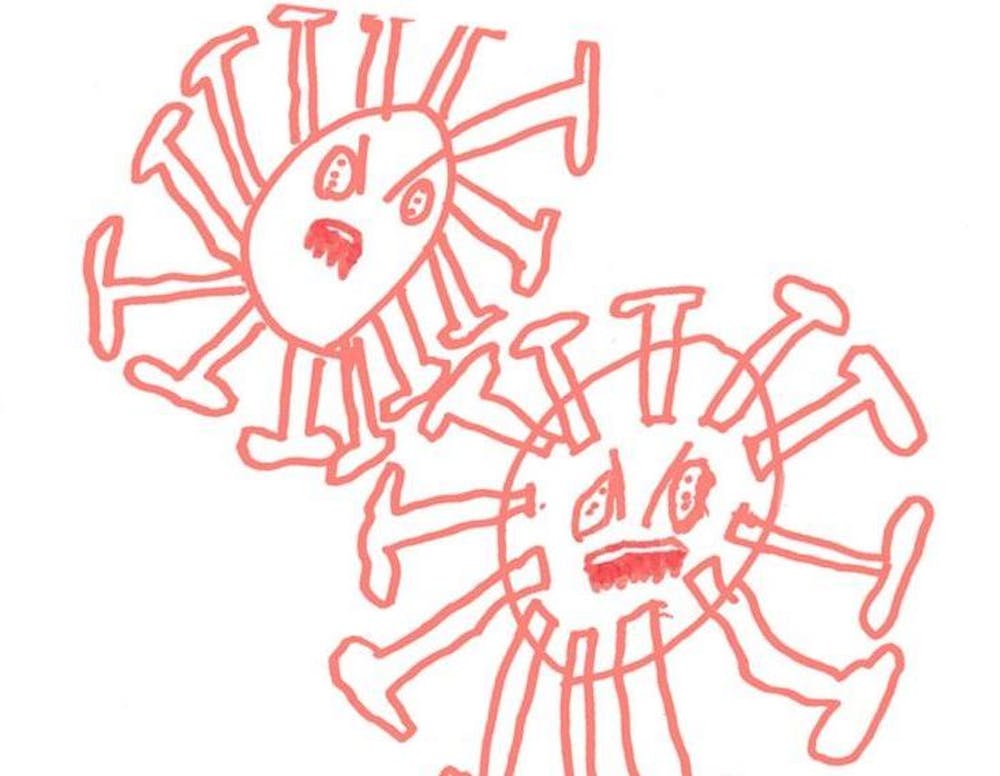 This drawing from Ben, aged 7, Tasmania, shows children express what they know about the coronavirus in many ways.
Author provided
This drawing from Ben, aged 7, Tasmania, shows children express what they know about the coronavirus in many ways.
Author provided
The survey was open when the highest level restrictions were in place across Tasmania, where the Australian arm of the study was based. In total, 49 children from Tasmania took part in the survey and 390 children internationally.
There were important differences across the countries when we conducted the survey, including the numbers of reported cases and deaths from COVID-19, as well as government responses and levels of restrictions.
For example, the reported deaths and cases were much higher in countries such as the UK and Brazil compared to Australia and children in Sweden continued to attend school, whereas most children in other countries were learning from home.
Read more: Is it time for Australia to implement kids-only COVID-19 briefings?
Here’s what we found
There were many similarities across the different countries in the things important to children, what they had to say and what they wanted to know. But there were also differences across countries and between children.
More than half the children said they knew a lot or quite a bit about COVID-19. Their comments included:
It is a stupid virus.
It spreads really quickly.
People play it down and tell me it can’t kill people, but I know people are dying each day.
But they also had questions:
How and where did it start?
What does the coronavirus actually look like?
How does it make you poorly?
Some said they did not want to know any more about the virus:
It is boring.
I don’t want to know about it because it’s killing people and that makes me sad.
Children expressed different emotions about COVID-19. They said they felt “worried”, “scared”, “angry” and “confused”.
Children knew the virus was particularly dangerous for vulnerable people:
It can possibly kill old and unhealthy people.
And they missed their friends and family:
When can we go back to school?
Children obtained information about COVID-19 from different sources, mostly from parents and teachers. Children also sought information from friends, TV shows and the internet, including social media.
Children understood what the community was being asked to do and they had learnt the meanings of new words and terms. So they knew what social distancing meant and that they needed to stay 1.5m apart.
Children also knew key public health messages about washing your hands, not touching your face and needing to stay at home “to save lives”.
Read more: 'Stupid coronavirus!' In uncertain times, we can help children through mindfulness and play
Why does this matter?
Children have had an important role in society’s response to COVID-19. Their significant contributions to limiting the spread of the virus have included being separated from family and friends, and limitations on important activities that are part of their “normal” lives.
However, the impacts on children’s lives and well-being are largely unacknowledged. Their contributions should be acknowledged and they should be thanked for their part.
Children have a right to be provided with information in a form that is appropriate for their safety and well-being. Children need to have the opportunity to ask questions and learn about what COVID-19 means for them with adults they trust, including parents and teachers.
Children have questions about COVID-19. Questions are different for each child and not all children want the same amount of information.
Read more: 8 tips on what to tell your kids about coronavirus
What can adults do?
Adults should make the time and space to have conversations with children. They can ask:
This approach means children are empowered to identify their needs and concerns, and the information they are provided is relevant and meets their needs.
Andrea Chelkowski, from the Centre for Education and Research — Nursing and Midwifery, Tasmanian Health Service South and University of Tasmania, Hobart, was part of the Australian research team. The lead author of the research mentioned in this article is Lucy Bray, professor in child health literacy, Edge Hill University, UK.
Authors: Karen Ford, Adjunct Associate Professor, School of Nursing, University of Tasmania


 Daily Bulletin


