

Read The Times Australia

Daily Bulletin

New Zealand puts an end to new permits for exploration of deep-sea oil and gas reserves

  • Written by: James Renwick, Professor, Physical Geography (climate science), Victoria University of Wellington
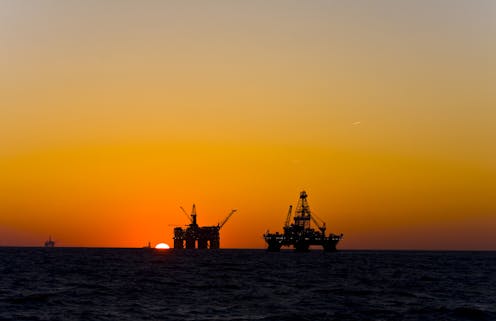
New Zealand puts an end to new permits for exploration of deep-sea oil and gas reserves

The New Zealand government’s announcement that it will not issue any new permits for offshore exploration for oil and gas deposits is exciting, and a step in the right direction.

We know that we can’t afford to burn much more oil if we want to meet the Paris Agreement target of keeping global temperature rise this century well below two degrees above pre-industrial levels. Almost all of the already known reserves must stay in the ground, and there is no room to go exploring for more.

Pursuing further reserves would only lead to stranded assets and would waste time and resources in the short term.

Read more: Why New Zealand should not explore for more natural gas reserves

Moving away from fossil fuels

New Zealand currently has 31 active permits for oil and gas exploration, and 22 of these are offshore. A program set up by the previous government invites bids each year for new onshore and offshore exploration permits. But this year it is restricted to the onshore Taranaki Basin, on the west coast of the North Island.

Complementing the move to shut down the exploration of new deep-sea fossil fuel reserves, the government’s new transport funding plan aims to reduce demand for fossil fuels by putting emphasis on public transport, cycling and walking.

This gets away from the outdated mantra of more roads and more cars that we have seen over the past decade and will tackle the transport sector, which has seen very rapid growth in emissions since 1990. This will help New Zealand onto a low-carbon pathway and promises a more people-focused future.

New Zealand is a small player in global emissions of greenhouse gases but our actions can carry symbolic weight on the world stage. Given our present position of 80% renewable electricity and an abundance of solar, wind, wave and tidal energy, if any country can become zero-carbon, surely New Zealand can. It can only benefit New Zealand - socially, economically and politically - to lead in this crucial race to stabilise the climate.

Read more: A new approach to emissions trading in a post-Paris climate

Rising emissions

As the government announced its ban on new offshore exploration permits, the latest greenhouse gas inventory was also released, showing some good news. New Zealand’s gross emissions went down slightly from 2015 to 2016.

But gross emissions are up nearly 20% since 1990, and net emissions (actual emissions minus the “sinks” from forestry) are up 54% over that time. The main factors that contributed to the increase were dairy intensification and increased transport and energy emissions.

Even though agriculture is still the largest source of emissions overall, energy and transport are close behind. We have seen a near-doubling in carbon dioxide emissions from road transport over the past 27 years.

It is encouraging to see a decrease in emissions from the waste sector. Per head of population, New Zealanders throw away significantly above the OECD average of rubbish, a lot of which is green waste that decomposes and releases methane, another potent but short-lived greenhouse gas.

While New Zealand emits a tiny fraction of the world’s greenhouse gases, on a per-capita basis we are sixth-highest among developed countries. We have as much responsibility as any country to reduce our emissions.

Even though emissions have risen, we are set to meet our national target for 2020 (a 5% reduction on 1990 levels) because of “carry-over” credits from the first Kyoto reporting period from 2008 to 2012. But to live up to more stringent future targets, we need a lot more action than we’ve seen over the last decade. The government plans to introduce zero-carbon legislation that will commit New Zealand to reaching the goal of carbn neutrality by 2050.

This will require serious investment and commitment to renewable technologies, changes in the transport sector, changes to agriculture and land use, and ultimately changes in the way we all live our lives.

Authors: James Renwick, Professor, Physical Geography (climate science), Victoria University of Wellington

Read more http://theconversation.com/new-zealand-puts-an-end-to-new-permits-for-exploration-of-deep-sea-oil-and-gas-reserves-94921

Business News

Inside the Icon: The BridgeMuseum Officially Opens at the Sydney Harbour Bridge

A bold new way to experience one of Australia’s most recognisable landmarks has arrived, with BridgeClimb Sydney officially opening the all-new BridgeMuseum.  Located inside the Sydney Harbour Brid...

Daily Bulletin - avatar Daily Bulletin

Is Your Brand Showing Up in AI Search? Most Melbourne Brands Aren't.

The New Front Door Nobody Told You About Something changed. Quietly. Without a press release. The way buyers find businesses in Australia has been rewired. Not replaced, rewired. Google isn't dead...

Daily Bulletin - avatar Daily Bulletin

How Australian Businesses Can Measure SEO ROI

SEO can feel vague when you are staring at a dashboard full of numbers that do not clearly connect to revenue. The key is to measure the right signals in the right order, then tie them back to outcome...

Daily Bulletin - avatar Daily Bulletin

How Commercial Roller Shutters Improve Site Security Without Slowing Operations

Security upgrades can be frustrating when they make everyday work harder. A door that takes too long to open, creates bottlenecks at shift change, or fails at the worst time can turn “better protectio...

Daily Bulletin - avatar Daily Bulletin

Why a Document Destruction Service Still Matters for Modern Businesses

Businesses generate large volumes of information every day, from staff records and contracts to invoices, reports and customer files. While attention often focuses on how documents are stored, the way...

Daily Bulletin - avatar Daily Bulletin

Bicycle Rack Safety and Space-Smart Storage

Bike storage problems usually show up as small annoyances first: tangled handlebars, scratched frames, and bikes that topple when you pull one out. Over time, those issues become safety risks, especia...

Daily Bulletin - avatar Daily Bulletin

How to Tell if a Childcare Centre Is a Good Fit for Your Child

Choosing childcare can feel like you’re making a huge decision with limited information. Tours are short, centres are often on their best behaviour, and your child might act differently in a new space...

Daily Bulletin - avatar Daily Bulletin

Car Import Timeline: What Usually Happens at Each Stage

Importing a car into Australia can feel confusing because multiple agencies and checkpoints are involved, and the timeline is shaped as much by paperwork quality as it is by shipping speed. The most u...

Daily Bulletin - avatar Daily Bulletin

Portable Toilet Hygiene Standards Explained: Clean vs Sanitised vs Disinfected

In portable toilet servicing, the words clean, sanitised, and disinfected often get used as if they mean the same thing. They don’t. And that difference matters because a unit can look tidy and still ...

Daily Bulletin - avatar Daily Bulletin

The Daily Magazine

The pressure cooker: life in urban Australia in 2026

Australian cities have always been demanding. Long commutes, rising housing costs, busy schedules a...

What Actually Makes a Good Criminal Lawyer in Melbourne

Most people only think about this question once. That is usually too late. Most people charged wi...

Why Working With A Chatswood Tutor Can Improve Academic Performance

Academic expectations continue increasing for students across primary school, high school, and senio...

Is It Worth Getting Solar Panels in Melbourne?

The real question is not whether solar works in Melbourne. It works. The question is what it is co...

How A Diploma Of Project Management Builds Practical Skills For Modern Work Environments

Developing the ability to plan, execute, and deliver outcomes efficiently is a key requirement in to...

How to Choose the Right Football for Every Level

Choosing a football may seem straightforward, but the right option depends on who will be using it a...

What to Ask a Wedding Photographer Before You Book

Booking a wedding photographer can feel deceptively simple: you like the photos, you like the vibe...

Why Stress Relief For Dogs Is Essential For Emotional Balance And Long-Term Wellbeing

Managing emotional health is just as important as physical care when it comes to pets, which is why ...

Australia’s Best Walking Trails and the Shoes You Need to Tackle Them

Australia is not short on spectacular walks. You can follow ocean cliffs in Victoria, cross ancien...