

Paramedics need more support to deal with daily trauma
- Written by: Andrea Phelps, A/Director Policy and Service Development, Australian Centre for Posttraumatic Mental Health, University of Melbourne
Among all emergency service workers, paramedics have the highest rate of PTSD, with an estimated prevalence of 14.6%. This compares to 7.3% among firefighters and 4.7% for police.
While all emergency service personnel face catastrophic and stressful events, paramedics are exposed to these events on a daily basis. Most of them are resilient, most of the time, but traumatic events still take their toll, particularly when you consider the cumulative effect of repeated exposure.
Some cases will slip behind the professional guard and become personal. Paramedics working in small communities are more likely to know the people they attend, or know the patient’s family. And paramedics anywhere can be confronted with a scene or a patient that strikes a personal chord for some reason; the age of a child, the clothes someone is wearing, the colour and make of the vehicle. The increasing incidence of assaults on paramedics from members of the public adds to the trauma load.
Read more: A soldier and a sex worker walk into a therapist’s office. Who's more likely to have PTSD?
Paramedics’ mental health can also be compounded by the very nature of the job: shift work, fatigue and having to make critical decisions under time pressures.
In international studies, the rate of anxiety among paramedics has been estimated to be as high as 22%, depression 10%, and suicidal ideation 10%. This compares to rates in the general community of 14.4% for anxiety, 6.2% for depression and 2.3% for suicidal ideation.
Paramedics’ access to restricted medical drugs places them in a unique situation in this regard, and misuse of restricted medical drugs has also recently hit the headlines.
In yet unpublished research, we asked emergency service workers what they liked most about their job. Most said it was the satisfaction of knowing they were doing the job well, making a positive impact on their communities and helping people in their hour of need.
If you’ve encountered a paramedic on the job, you’ll likely have been reassured by their cool, calm and professional demeanour. Paramedics are well-trained to deal with medical emergencies and the horrific aftermath of accidents and disaster scenes. Focusing on the job at hand is an effective way of coping and keeping an emotional distance from the event.
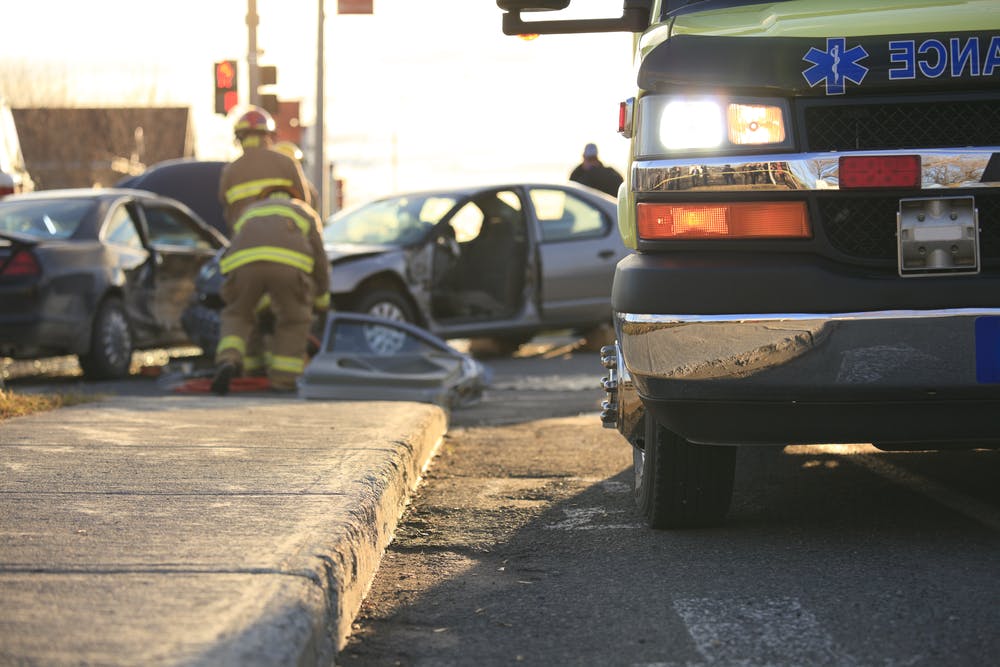 Focusing on the task at hand is an effective coping mechanism, but some cases will inevitably get under the skin of paramedics.
from www.shutterstock.com
Focusing on the task at hand is an effective coping mechanism, but some cases will inevitably get under the skin of paramedics.
from www.shutterstock.com
Read more: Explainer: what is post-traumatic stress disorder?
Who is at risk?
But how can we predict who will be resilient and who will develop PTSD or other post-traumatic mental health problems? Those who have existing mental health problems may be more vulnerable, but this is only a small part of the answer.
The nature and severity of exposure to trauma is important. Intentional, interpersonal trauma such as physical or sexual assault is more likely to give rise to PTSD than an accident or disaster. Prolonged or repeated trauma is more likely to lead to more complex symptoms.
But the research tells us this isn’t the full story. The best predictor of recovery after trauma is the social support a person receives after the event, and whether they have other life stressors.
In the work context, this means a high level of organisational support can buffer the impact of trauma, while a high level of day-to-day operational and organisational stress can mean the person has fewer psychological resources in reserve to cope with a particularly traumatic experience.
Read more: One in five police officers are at risk of PTSD – here's how we need to respond
What needs to be done?
Support from colleagues, as well as family and friends, is of critical importance after a traumatic event.
Organisations where staff have a predictable risk of exposure to trauma have a responsibility to build a supportive workplace culture, have policies and procedures in place to ensure support is provided in the immediate aftermath of trauma, and staff who need additional help have early access to best-practice, evidence-based care with specialist mental health practitioners. All emergency service organisations are working towards these goals.
At a community level, we need to remember our emergency service workers put their lives and wellbeing on the line for the sake of their communities. Respect and compassion is the least they should expect in return.
Authors: Andrea Phelps, A/Director Policy and Service Development, Australian Centre for Posttraumatic Mental Health, University of Melbourne
Read more http://theconversation.com/paramedics-need-more-support-to-deal-with-daily-trauma-97315


 Daily Bulletin


