

Many people have a hard time swallowing. Help them to 'eat, drink and be merry' this Christmas
- Written by: Bronwyn Hemsley, Professor of Speech Pathology, University of Technology Sydney
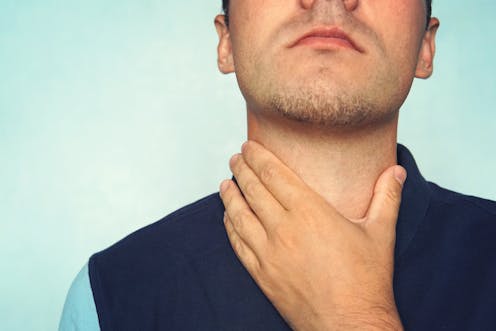
Swallowing food, drink, and saliva is a central part of our lives. It’s something we do about 900 times a day, yet we barely give it a second thought. We’re mostly unaware of the many food decisions we make every day.
But if you have a swallowing disability, the traditional roasted nuts and dried fruits of Christmas fare are a choking risk, and enjoying a festive bite at the markets could mean an emergency trip to the hospital.
Swallowing and eating: how does it work?
Swallowing is a complex, precisely co-ordinated act involving 32 paired muscles and sensory and motor nerves, carried out in a beautifully timed sequence. So it makes perfect sense many different health conditions affecting the brain or the body impact on a person’s ability to swallow.
Swallowing disabilities affect an estimated 8% of the world’s population. Affecting the majority of residents in aged care, swallowing disability also impacts around 80% of children and adults with developmental disability, most people with motor neurone disease or Parkinson’s, and many people with traumatic brain injury, head and neck cancer, and those who have had a stroke.
In the general population, both alcohol and certain medications can impact on a person’s ability to swallow food safely.
It’s hard to fathom the extent of the disability experienced by people who have difficulty swallowing. The meanings we attach to food, and the ways we engage in eating and drinking, are deeply connected to our identity and our most valued activities and experiences. Decisions about food and meals are a key way we organise our day.
Read more: The shocking state of oral health in our nursing homes, and how family members can help
As a result, swallowing disability has many health and social impacts. Fear of embarrassment or of revealing they can’t manage certain foods can prevent people from telling others about their symptoms. They may take longer to eat, avoid foods that are more difficult, eat less, or say they no longer like the foods they previously enjoyed.
Being excluded or unable to participate fully in a meal or a social event can leave people with swallowing disability feeling isolated, depressed, and frustrated.
Swallowing disability can result in unplanned hospital admissions that come with substantial costs. Coughing and choking on food can lead to reduced enjoyment in meals, aspiration pneumonia when food or fluid is inhaled, and choking death.
Managing swallowing disability also impact on family members and home routines. Many family members change the types of foods they eat to ensure the person with swallowing disability is included. But foods on offer in restaurants, at weddings, parties, religious rituals and sporting events might not be safe to eat, and it can be awkward to take your own carefully modified foods.
The stigma of swallowing disability can lead the person and their partner, spouse, or family member to avoid embarrassment and stop going out.
“… when you can’t swallow, all that you get to think about is that you can’t swallow.”Vital interventions for people with swallowing disability
Speech pathologists often take a lead role in teams of health professionals who provide services to people with swallowing disability. They assess the person’s swallow, make recommendations about modifying food textures, and identify ways to increase the person’s participation, inclusion, and independence at mealtimes. At the same time, they determine ways for the person with disability to communicate with family members and direct support workers about food preferences and mealtime assistance needs.
The treatment for swallowing difficulties depends on the cause. Speech pathologists can teach the person techniques to improve their oral skills, from taking the first bite to moving the food back and chewing it to swallow. They can provide advice on head and neck postures and mealtime behaviours to help prevent choking.
Recently, the National Disability Insurance Agency refused funding of speech pathology services to people with swallowing disability. Not considering the person’s lifelong difficulty in eating and drinking to be a social issue affecting participation and inclusion leaves people and their families at risk of further isolation and exclusion.
People with swallowing disability need more support and want better access to services to adjust to emotional, psychological and social changes as a result of their swallowing difficulties.
The NDIS needs to confirm funding for speech pathology services for people with swallowing disability.
Making mealtimes more inclusive
There’s a lot you can do to make your celebrations more welcoming and inclusive of people with swallowing disability and their families. Set your own table with attractive soft food options and puree foods and check if people need assistance or a quiet space to concentrate on eating.
Read more: How 3D food printers could improve mealtimes for people with swallowing disorders
Making these small adjustments to the foods we provide and the mealtime environment might just mean more people with swallowing disability feel welcome and included in the celebrations this year.
Learn the symptoms of choking and how to respond, and in an emergency in Australia dial triple zero 000 for further assistance.
Authors: Bronwyn Hemsley, Professor of Speech Pathology, University of Technology Sydney


 Daily Bulletin


