

Forget sharks... here's why you are more likely to be injured by litter at the beach
- Written by: Marnie Campbell, Chevron Harry Butler Chair in Biosecurity and Environmental Science, Murdoch University
Our beaches are our summer playgrounds, yet beach litter and marine debris injures one-fifth of beach users, particularly children and older people.
Our research, published in the journal Science of the Total Environment, found more than 7,800 injuries on New Zealand beaches each year – in 2016, some 595 of them were related to beach litter. The most common injuries caused by litter were punctures and cuts, but they also included fractured limbs, burns, head trauma, and even blindness.
Children under 14 suffered 31% of all beach litter injuries, and were injured by beach litter at twice the rate compared with other locations in New Zealand. Beach litter injury claims exceeded NZ$325,000 in 2016, representing a growing proportion of all beach injury claims. Beach injury claims changed from 1.2% of the total in 2007 to 2.9% in 2016.
Read more: This South Pacific island of rubbish shows why we need to quit our plastic habit
Our study relied on reported injury insurance claims in New Zealand, and thus probably underestimates the true injury rate, particularly for minor wounds. Our 2016 survey of beachgoers in Tasmania found that 21.6% of them had been injured by beach litter at any time previously – even on the island state’s most picturesque beaches.
Alarmingly, most beach users in the Tasmanian survey did not consider beach litter an injury risk, despite the high rate of self-reported injuries.
Awash with danger
As more debris washes ashore and our recreational use of our coasts increases, it is more likely than ever before that we will encounter beach litter, even on remote and “pristine” beaches.
Global studies have found up to 15 items of debris per square metre of beach, even in remote locations. On Henderson Island – a supposedly pristine South Pacific outpost miles from anywhere – some 3,570 new pieces of litter arrive every day on one beach alone.
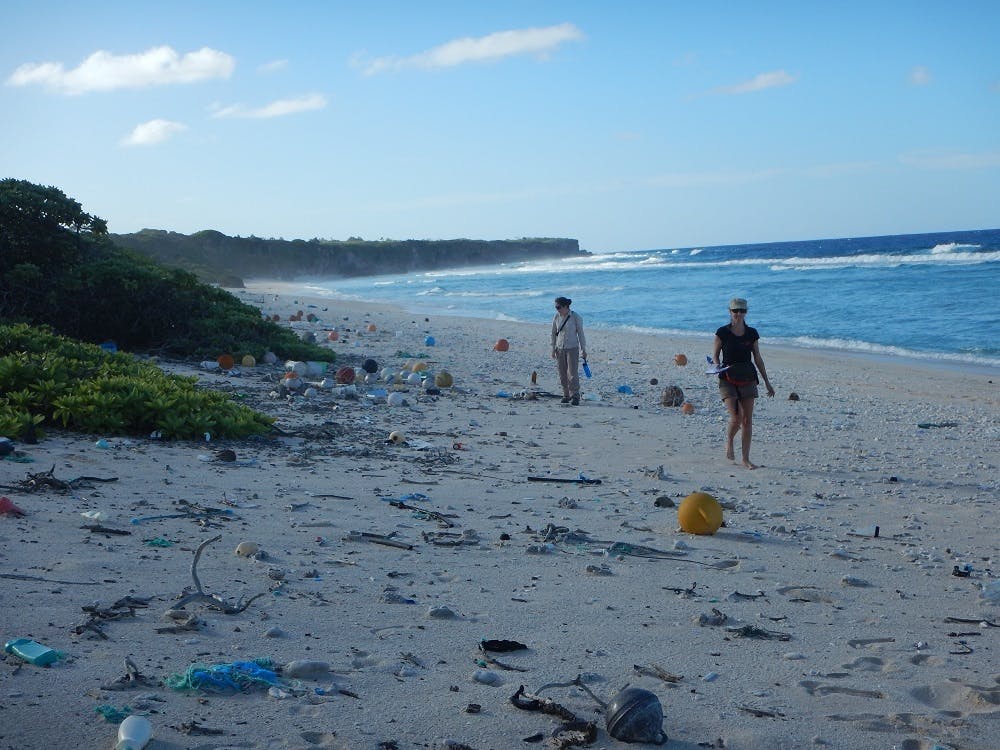 Your local beach might not be as bad as this, but it still pays to take care.
Jennifer Lavers/AAP Image
Your local beach might not be as bad as this, but it still pays to take care.
Jennifer Lavers/AAP Image
Beach litter typically includes a huge range of items, such as:
- broken glass
- sharp and rusted metal such as car bodies, food cans, fish hooks, and barbed wire
- flammable or toxic materials such as cigarette lighters, flares, ammunition and explosives, and vessels containing chemicals or rotten food
- sanitary and medical waste such as used syringes, dirty nappies, condoms, tampons and sanitary pads
- bagged and unbagged dog faeces and dead domestic animals.
The health hazards posed by beach litter include choking or ingesting poisons (particularly for young children), exposure to toxic chemicals, tripping, punctures and cuts, burns, explosions, and exposure to disease.
Degrading plastic can also produce toxins that contaminate seafood, potentially entering human or ecological food chains.
Rubbish knowledge
Despite the potential severity of these hazards our understanding and study of human health impacts from beach litter is poor. We know more about the impacts of beach litter and marine debris on wildlife than on humans.
Two of our previous studies in Australia and New Zealand have found beach litter that can cause punctures and cuts at densities 227 items per 100 square metres of beach, and choking hazards at densities of 153 items per 100 square metres of beach. These exposures to beach litter hazards in Australia and New Zealand may be 50% higher than global averages (based on preliminary data).
Read more: How much plastic does it take to kill a turtle? Typically just 14 pieces
Even “clean” beaches can be hazardous, and may even increase the likelihood of injury. Visitors to a recently cleaned or supposedly “pristine” beach may be less vigilant for hazards. What’s more, European studies have found that actively cleaned beaches can still have hazardous debris items.
The risk of injury will continue to increase without concerted efforts to prevent addition of new debris and the active removal of existing rubbish. Besides watching where we tread when at the beach and participating in beach cleanups, we also need to make sure we deal with rubbish thoughtfully, so litter doesn’t end up there in the first place.
Authors: Marnie Campbell, Chevron Harry Butler Chair in Biosecurity and Environmental Science, Murdoch University


 Daily Bulletin


