

Public spaces bind cities together. What happens when coronavirus forces us apart?
- Written by: Tahj Rosmarin, Research Officer, Faculty of Architecture, Building and Planning, University of Melbourne
In modern cities, our public spaces represent our shared values. They are our common assets, owned, maintained and used by all members of our society. The outbreak of coronavirus and its immediate impacts, such as social distancing, have raised many questions about the role of public space in such times.
Since the World Health Organisation declared the COVID-19 pandemic, countries had been forced to adopt social isolation measures very quickly. Australia has progressively increased enforceable social distancing measures. India’s nearly 1.4 billion people have been ordered not to leave their homes. In Europe, first Italy, then Spain, France, Belgium and the UK have entered periods of total lockdown. It’s happening closer to home in New Zealand.
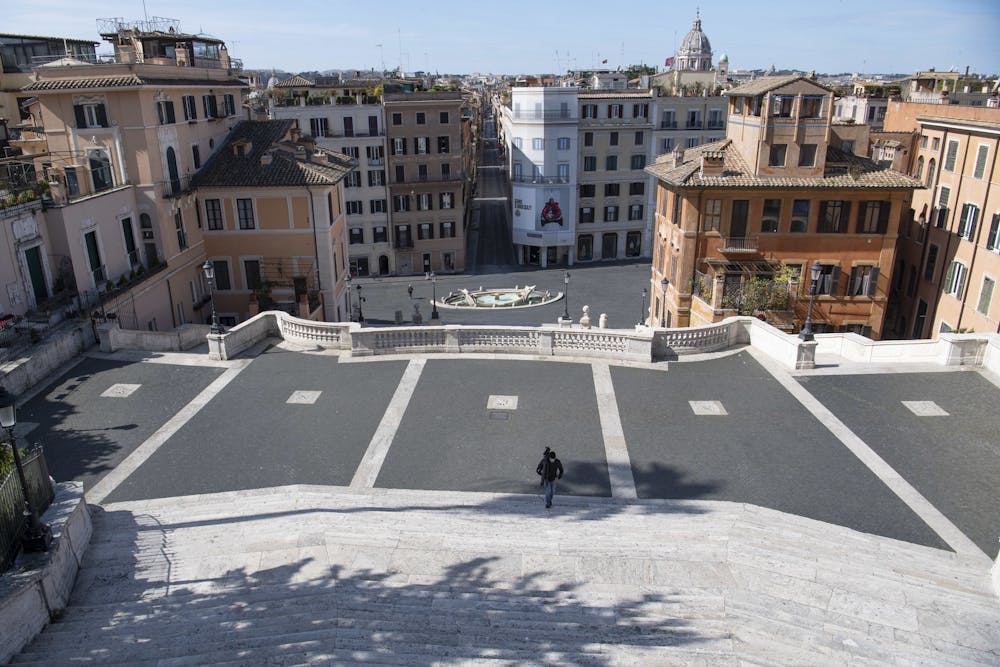 Instead of the usual crowds, the view from the top of the Spanish Steps in Rome, Italy, is of a deserted street and square.
Maurizzio Brambatti/EPA/AAP
Instead of the usual crowds, the view from the top of the Spanish Steps in Rome, Italy, is of a deserted street and square.
Maurizzio Brambatti/EPA/AAP
Read more: Coronavirus: locked-down Italy's changing urban space
While the economic impacts of the pandemic are becoming obvious, the influence upon public space still remains uncertain.
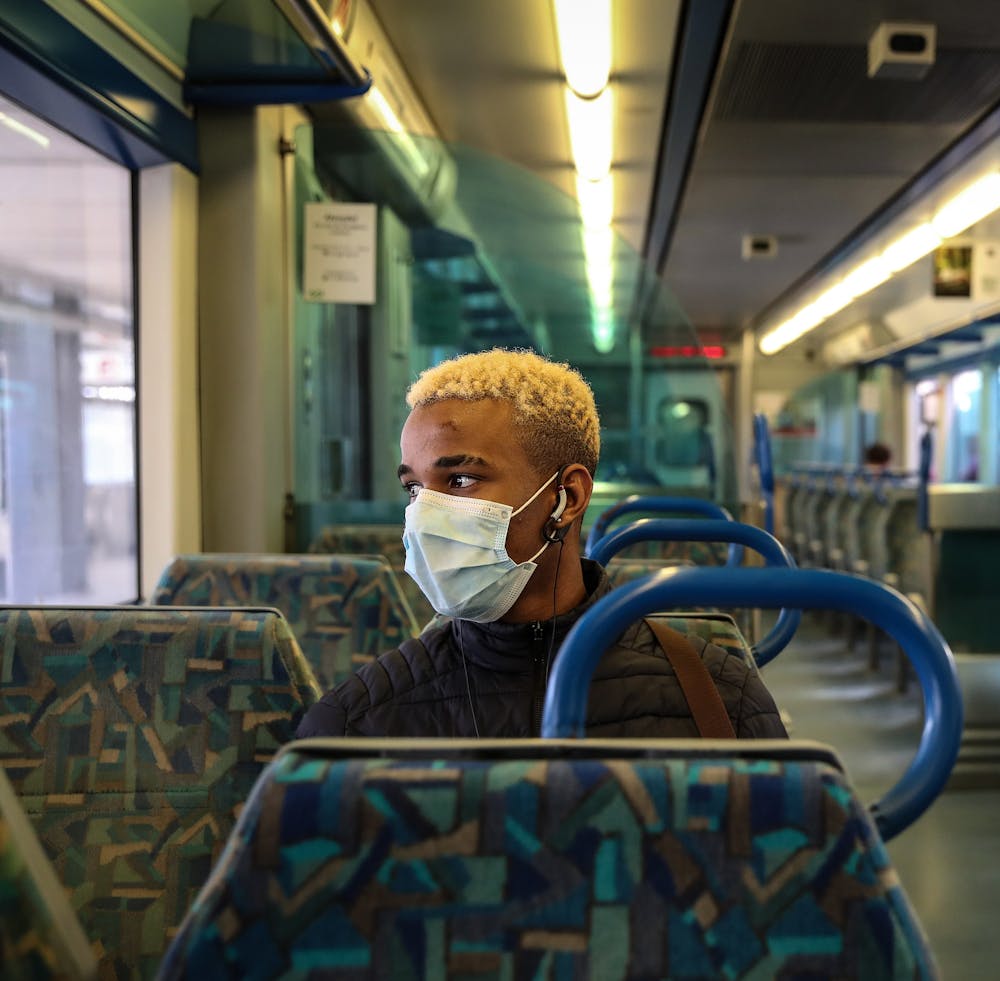 Despite being made free to reduce infection risks, public transport in Portugal is almost deserted.
Manuel de Almeida/EPA/AAP
Despite being made free to reduce infection risks, public transport in Portugal is almost deserted.
Manuel de Almeida/EPA/AAP
With businesses being forced to close and whole sectors urged to work from home, streetlife is grinding to a halt across the world. As fear of infection has increased, public transport use has plummeted.
Australia is among the increasing numbers of countries to close “non-essential” public space, including restaurants, cafes and cinemas. Around the world, major sporting events, music concerts and comedy festivals have all been cancelled. Any non-essential travel and meetings are being discouraged or banned.
 Sporting grounds are one of the great public meeting places for Australians, but games were being played in empty stadiums before competitions shut down altogether.
Darren Pateman/AAP
Sporting grounds are one of the great public meeting places for Australians, but games were being played in empty stadiums before competitions shut down altogether.
Darren Pateman/AAP
These measures are significant: they could uproot the very foundations of how people interact in public.
While this intense monitoring of public space is a temporary control, it raises questions about the future. Will we return to our normal habits once it’s all over? Will coughing on the subway be forever taboo?
Read more: To limit coronavirus risks on public transport, here's what we can learn from efforts overseas
Collectivism or individualism?
The coronavirus pandemic has had immediate impacts – both negative and positive – on how people interact with each other in public. Xenophobia and racial stereotyping have led to antisocial public behaviour. And supermarkets have become stages for public fights over toilet paper and hand sanitiser.
In spite of this, we have also seen instances of collectivism and urban resilience. In Italy, the national lockdown has forced people to create a new type of public space. Citizens are taking to their balconies and windows to enjoy music together, sharing songs across buildings and above streets.
People play music and interact from their balconies, as Italy continues its lockdown.It’s a reminder that connection and interaction are integral to our society even in times of crisis. But is this particular type of collectivism a product of urban density? These scenes may not be so easily replicated in Australia’s sprawling suburbs. However, we are seeing other displays of community.
Read more: How a time of panic buying could yet bring us together
What will fill the void?
The practice of self-isolation raises many uncertainties about public space. Daily human contact is ingrained in the ways people interact in public spaces. Will social isolation lead to a more individualistic approach to public spaces?
In 2020, perhaps this type of physical isolation will not feel so foreign as it might once have. Email, social media and the sharing economy already provide the necessary digital infrastructure.
The role of technology will be heightened as digital space becomes even more prominent as a platform for sharing information and enabling human interaction. Events like these also highlight the shortfalls of our digital infrastructure, in particular the need to improve our national broadband network (NBN).
Read more: Coronavirus: telcos are picking up where the NBN is failing. Here's what it means for you
Coronavirus will change the ways we work and study. But it won’t remove our desire for human connection.
Our trust in public spaces will need to be rebuilt if we are to rebuild our economy and our society. In the face of generational issues such as climate change and homelessness, there is hope coronavirus might actually offer us an opportunity to radically reassess our communal values.
Authors: Tahj Rosmarin, Research Officer, Faculty of Architecture, Building and Planning, University of Melbourne


 Daily Bulletin


