Read The Times Australia

Daily Bulletin

China, North Korea and trade the key talking points when Turnbull meets Trump

  • Written by: Tony Walker, Adjunct Professor, School of Communications, La Trobe University
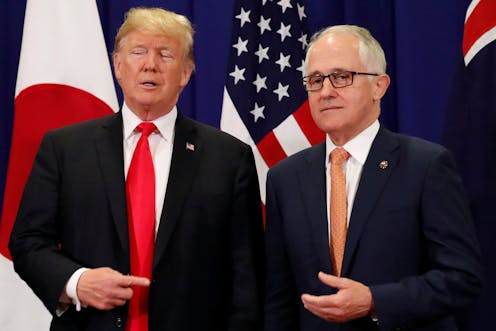
China, North Korea and trade the key talking points when Turnbull meets TrumpMalcolm Turnbull will be relieved to have some time away from the Barnaby Joyce affair when he arrives in Washington this week.Reuters/Jonathan Ernst

Malcolm Turnbull was no doubt relieved when the prime ministerial jet lifted off from Australian soil yesterday, bound for the United States and his first formal round of discussions in Washington...

Read more …

Poll says most people support a ban on whips in Australian horse racing

  • Written by: Paul McGreevy, Professor of Animal Behaviour and Animal Welfare Science, University of Sydney

Three-quarters of Australians quizzed in a poll said they do not support the whipping of horses in racing, a study published today in PLOS ONE shows.

Most of those identified as racing enthusiasts said they would continue to attend or gamble on racing if the whip was banned. Only one in eight of those racing fans said they would no longer watch or...

Read more …

Should Australia recognise the human right to a healthy environment?

  • Written by: Meg Good, Adjunct Lecturer, Faculty of Law, University of Tasmania
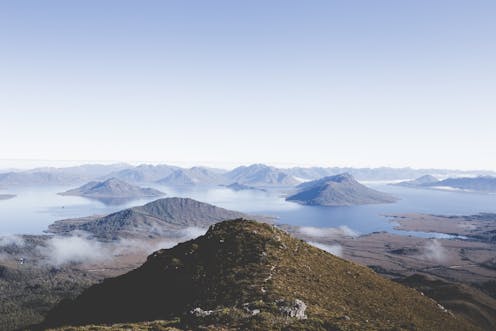
Should Australia recognise the human right to a healthy environment?Australia is one of very few countries that does not recognise the right to a healthy environment.Jordan Davis, Author provided

Australia is one of only 15 nations (a list that also includes Canada and the United States) that does not recognise the human right to a healthy environment at the federal level.

Last year, the Australian Panel of Experts...

Read more …

How employers can design workplaces to promote wellness

  • Written by: Libby Sander, Assistant Professor of Organisational Behaviour, Bond Business School, Bond University
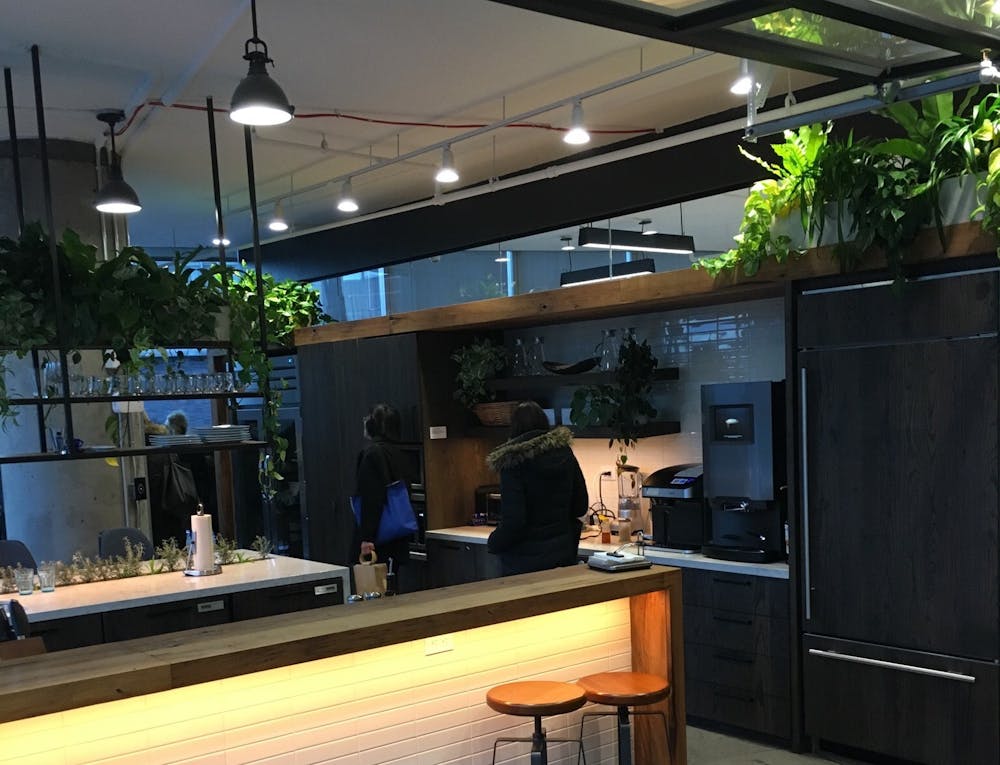
How employers can design workplaces to promote wellness

Companies spend tens of billions of dollars each year on wellness programs - on gyms, health funds, yoga classes, and the like. But research shows only mixed success, with low take-up rates among employees and a poor return on investment for companies.

People attending work while sick costs the Australian economy about A$34.1 billion each year through lost productivity.

Rather than promoting these wellness programs, companies should instead design the workplace itself to support wellness. Sleep pods, air filtered by green walls, and selectively placed healthy food are already realities in some workplaces.

Through this kind of design, employees are “opted-in” to an environment that supports their health and well-being during the day. They don’t have to choose to take a walk at lunchtime or think about taking the stairs. The design of the workplace is engineered around creating these positive choices.

Read more: Research shows if you improve the air quality at work, you improve productivity

It isn’t just “presenteeism” (showing up to work in spite of medical problems such as back pain, headaches, or mental health issues) that is a problem. The cost of absenteeism in Australia is estimated at A$7 billion a year.

Meanwhile, the prevalence of chronic disease including obesity, diabetes and heart disease continues to rise among the workforce.

Modern work practices contribute to these diseases through the largely sedentary nature of modern office work. Increased sitting, for example, has been associated with higher risk of chronic disease.
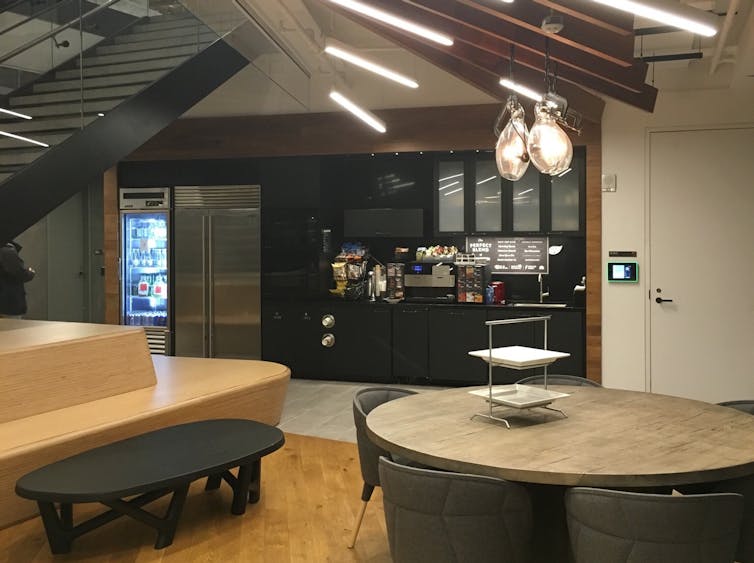
How employers can design workplaces to promote wellness

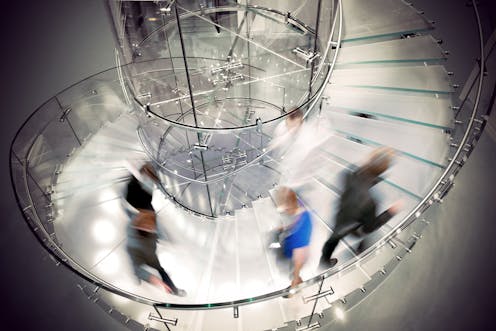
Putting staircases in the middle of offices can encourage more use. For timber stairs options, please visit Wilmaplex.

Wellness programs have become increasingly popular as companies and researchers have realised that productivity lies in the health of individual workers. The focus has also shifted to prevention of health problems rather than treating them after the fact.

Traditionally, this was accomplished by offering a range of services, from discounted health fund and gym memberships, and medical screening services, to activity-based programs such as in-house massages and yoga classes.

But simply giving employees lots of information about their health and telling them what to do doesn’t work. Research has shown that these programs don’t often change behaviour or help us to build new habits. If we are faced with too many choices, for example, our self control is quickly depleted.

So instead of simply presenting employees with options that are good for us, companies can borrow from behavioural economics and “nudge” us to change our behaviour.

Read more: 'Nudging' people towards changing behaviour: what works and why (not)?

Many workplaces are already using this design, covering a range of factors including lighting, air quality, materials, furniture, physical activity, and food.

Take the stairs, for example. In traditional offices lifts are generally positioned centrally, making them the easiest option. If you wanted to take the stairs that often means using the fire stairs, with the added risk that you might be locked out when you try to re-enter on another floor.

By simply moving the staircase into a central position you can make them the most convenient option for quickly moving between floors. This is common practice now at a wide variety of companies such as the Boston Consulting Group’s New York offices.

But let’s not stop there. By using experience design, employees can be incentivised in other ways to take the stairs.

Timber walls, natural lighting, art and music can be used to align with our natural preferences for attractive and calming environments, and nudge employees to take the stairs. At the offices of Delos in New York, sensors in the stairs record the number of trips employees take during the day.

Every time an employee uses the stairs, a drop of water is added to an electronic “waterfall” display. The more times you take the stairs, the bigger the waterfall gets.

This use of technology represents a bit of gamification within the workplace. It’s like a scorecard for stair use, and every trip comes with a visual reward that gradually adds up.
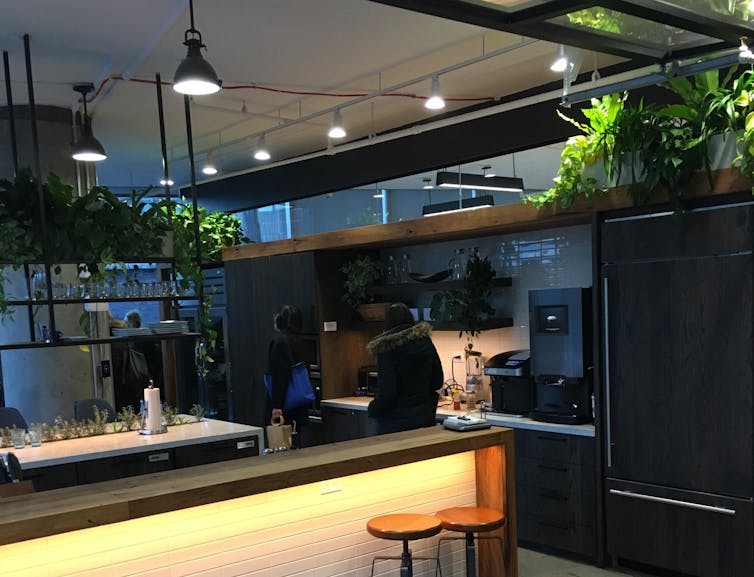
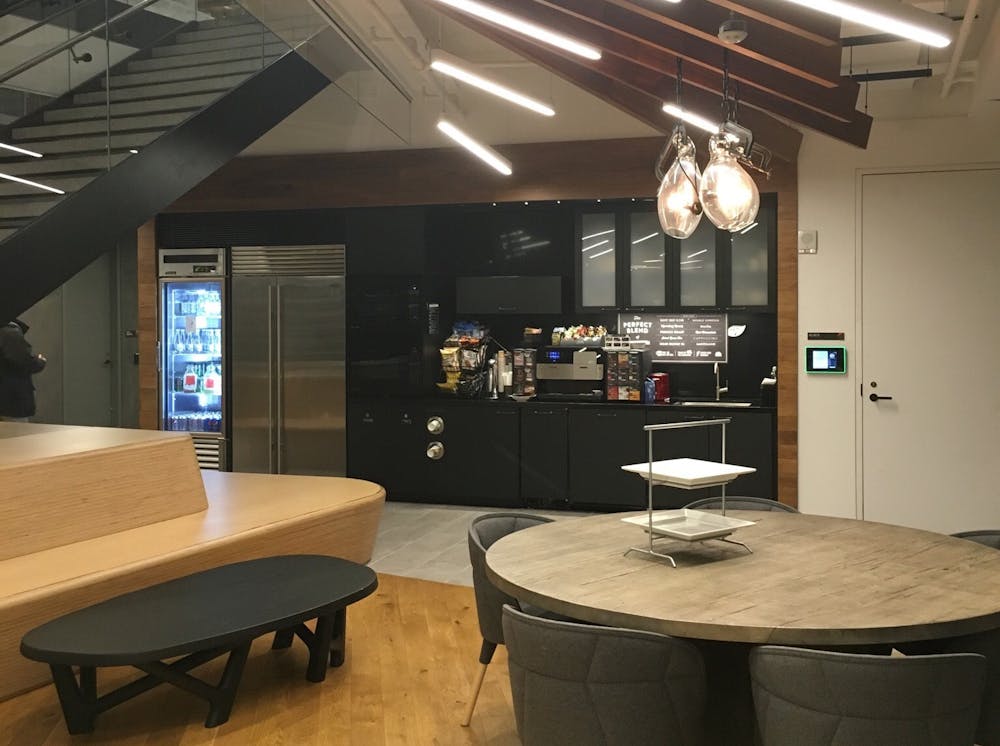
How employers can design workplaces to promote wellness Communal areas and greenery in the Delos New York HQ. Author provided

Read more: Not just nice to have: nature in the workplace makes employees happier and healthier

By creating well-designed, centrally located eating areas and providing healthy food choices, organisations can also encourage employees to make better food choices.

In one study researchers from Yale teamed up with Google to try and nudge employees towards healthy choices. Simple changes in the office cafe had huge results. Replacing loose M&Ms with small packages reduced service sizes by 58%, and putting up prominent signs increased the number of employees eating certain vegetable dishes by 74%.

Research also shows that air quality and lighting at work can have significant effects on brain function and productivity. Poor oxygen levels, toxic gases from furniture, and toxic chemicals are commonplace in modern workplaces, while poor lighting can cause headaches, eye strain, and tiredness.

Workplaces can be designed to counter some of these problems, by using circadian lighting systems for instance. Circadian lighting follows the patterns of natural light over the course of a day. Sleepy in the morning? The system will provide the right amount of light to wake you up. Circadian lighting results in your body releasing melatonin at the right times, helping employees unwind after work and improving sleep quality.

Using air filtration systems, as well as materials and furniture that don’t contain chemicals like formaldehyde, can significantly contribute to employees’ well-being and productivity. Providing natural ventilation, views of nature, and greenery in the workplace have also been shown to improve employee’s wellbeing and productivity.

Read more: Research shows if you improve the air quality at work, you improve productivity

Investing in office design has been seen as a “nice to have”, but the research shows that it can also be seen as an investment. The costs of employee illness and lost productivity are high and even simple changes can have huge impact.

And while employees may be concerned about companies designing environments to engineer behavioural choices, this inclusion of behavioural insights is widespread, and can be seen in areas as diverse as city planning and retail.

By providing environments that support and encourage employee well-being organisations can ensure that well-being is not something that people have to make a choice to opt-in on.

Authors: Libby Sander, Assistant Professor of Organisational Behaviour, Bond Business School, Bond University


Read more http://theconversation.com/how-employers-can-design-workplaces-to-promote-wellness-91983

More Articles …

  1. Greenwashing the property market: why 'green star' ratings don't guarantee more sustainable buildings
  2. I've always wondered: why many people in Asian countries wear masks, and whether they work
  3. Play-based learning can set your child up for success at school and beyond
  4. Barnaby Joyce wields the tea towel in the government's soap opera
  5. Why Australia needs a better system for credit scores
  6. The off-topic Conversation #153
  7. Why we developed a microscope for your phone – and published the design
  8. Why telling people they could get sick in the future won't persuade them to be healthy now
  9. Explainer: the doping case against Russian curler Aleksandr Krushelnitckii
  10. 'No pokies' Xenophon goes for 'some pokies', but does his gambling policy go far enough?
  11. FactCheck: are 'around 5,000 jobs' at risk if pokies are removed from pubs and clubs in Tasmania?
  12. Mythbusting Ancient Rome: did Christians ban the ancient Olympics?
  13. A brief history of Martian exploration – as the InSight Lander prepares to launch
  14. Curious Kids: Where do seagulls go when they die and why don't we find dead seagulls on the beach?
  15. Australia's consumer laws still don't cover e-books and many other digital products
  16. The other 99%: retrofitting is the key to putting more Australians into eco-homes
  17. Research Check: will eating 'ultra-processed' foods give you cancer?
  18. Where should the law draw the line between consent and culpability in sadomasochism?
  19. Bullying, threats and violence: report details the difficult job of a principal
  20. Joyce tells WA Nats to leave his future to those with 'skin in the game'
  21. No, you can't tap your hand to get on the train – where biohacktivists stand under the law
  22. Australia may be engaging in 'free trade' but it's becoming more protectionist too
  23. Now you see us: how casting an eerie glow on fish can help count and conserve them
  24. A public broadcaster that bows to political pressure isn't doing its job
  25. For what shall it profit a city if it loses its civic soul? A plea to preserve Melbourne's Fed Square
  26. Thirty years since the Seoul Olympics, South Korea is still tackling the legacy of overseas adoption
  27. Grey's Anatomy is unrealistic, but it might make junior doctors more compassionate
  28. Why police in schools won't reduce youth crime in Victoria
  29. Deposit schemes reduce drink containers in the ocean by 40%
  30. What happens when employees are fired for complaining at work
  31. Farewell to Paper presents an engaging double act on lost things
  32. We won't close the gap if the Commonwealth cuts off Indigenous housing support
  33. Spinal fusion surgery for lower back pain: it's costly and there's little evidence it'll work
  34. How we can put a stop to the revolving door between homelessness and imprisonment
  35. Sizes matters for black hole formation, but there's something missing in the middle ground
  36. Fischer calls for quick resolution of Nationals crisis, while Joyce is determined to fight to the death
  37. Tesla's 'virtual power plant' might be second-best to real people power
  38. Here's what you need to know about the new flu vaccines for over-65s
  39. Why sport hasn't made much progress on LGBTI+ rights since the Sochi Olympics
  40. Explainer: what are credit ratings and why do they matter?
  41. The first charges over Russian involvement in the US election have been laid – are there more to come?
  42. Curious Kids: Where do my recycled items go?
  43. Seeing the unseeable: how viewing crime scene photos can be beneficial
  44. Comic-explainer: How does Islamic finance work?
  45. FactCheck: do bank profits 'belong to everyday Australians'?
  46. So many public toilets are a last resort – why not a restful refuge?
  47. Can diet improve the symptoms of endometriosis? Sadly, there's no clear answer
  48. The surprising benefits of oysters (and no, it's not what you're thinking)
  49. Russia not so much a (re)rising superpower as a skilled strategic spoiler
  50. We should learn to work with robots and not worry about them taking our jobs

Business News

How Immigration Lawyers Can Help

Introduction Visa decisions can shape employment, family life, study plans, travel, and future residence. A small omission can lead to delay, added expense, or refusal. Immigration lawyers assess l...

Daily Bulletin - avatar Daily Bulletin

How Industrial Drying Equipment Supports Efficient Processing

Many industrial processes require moisture to be removed from compressed air, products or process materials before they move to the next stage. Excess moisture can affect equipment performance, produc...

Daily Bulletin - avatar Daily Bulletin

Practical Ways a Whiteboard Can Improve Workplace Communication

Effective communication helps teams stay organised, share ideas and keep track of important information. While digital tools are now common in many workplaces, a whiteboard continues to provide a simp...

Daily Bulletin - avatar Daily Bulletin

Designing Eco-Friendly Custom Water Bottles for Your Next Event

The Evolution of Sustainable Event Merchandise Event planning has undergone a massive transformation over the last decade. Gone are the days when organizers could hand out cheap, single use plastic...

Daily Bulletin - avatar Daily Bulletin

Why Choosing a Professional Florist Melbourne Makes Flower Delivery Impactful

Flowers have a great power to speak when humans cannot express their feelings with right words. Flowers are the best gifts when you are celebrating a birthday or welcoming a newborn child into your fa...

Daily Bulletin - avatar Daily Bulletin

The Business Case for Choosing Australian Fabricators Over Imported Alternatives

For a long time, you might have defaulted to overseas suppliers when sourcing fabricated metal components for a project. The unit price was lower on paper, and the maths seemed straightforward. That...

Daily Bulletin - avatar Daily Bulletin

Australian organisations are relying on business continuity plans built for a far more predictable world

Tariff escalations, supply chain fragility, geopolitical events, and the ongoing threat of cyber disruption have reshaped the risk environment facing Australian organisations. The problem is that ma...

Daily Bulletin - avatar Daily Bulletin

How to Rent a Car for Uber in Melbourne: What Every New Driver Needs to Know

Starting out as an Uber driver in Melbourne is not as complicated as it sounds but getting the vehicle right is where most new drivers get stuck. Uber has strict requirements around vehicle age, condi...

Daily Bulletin - avatar Daily Bulletin

When Should You Speak to a Lawyer About a Legal Issue?

Legal issues can begin with a simple question, then become harder to manage once formal steps are involved. Many people wait until a matter feels urgent before seeking guidance, even though earlier ...

Daily Bulletin - avatar Daily Bulletin

The Daily Magazine

Choosing an ELISA Format That Matches Your Target

A colorimetric ELISA ends with a plate that has developed color, and the instinct is to read more ...

Why Accurate Measurements Matter When Ordering Flatpack Cabinets

Ordering flatpack cabinets can make a renovation or storage project more manageable, but the proce...

How Long Does Interstate Freight Take in Australia?

If you have ever arranged for stock, equipment or materials to travel from one Australian state to a...

How AEC Firms Can Scale Faster Without Sacrificing Project Quality

Growth presents a fundamental dilemma for architecture, engineering, and construction firms: expan...

What Makes an Aesthetic Clinic Worth Going Back To?

Trying an aesthetic clinic for the first time can feel like a bit of a gamble. You can read review...

Elevate Your Morning Routine with Cafe-Style Coffee at Home with the Right Coffee Machine

There's something magical about that first sip of coffee in the morning. It’s more than just a bev...

Top Garment Steamers for Busy Professionals in Australia

The gap between garment steamers built for a quick touch-up and ones built to keep pace with a wor...

Correct Sleeping Posture to Minimize Back Strain

Most people don’t pay much attention to how they sleep until they start waking up with a stiff bac...

Why Product Longevity Matters for Sustainable Australian Buildings

Sustainability in building design is often associated with recycled materials, renewable resources a...